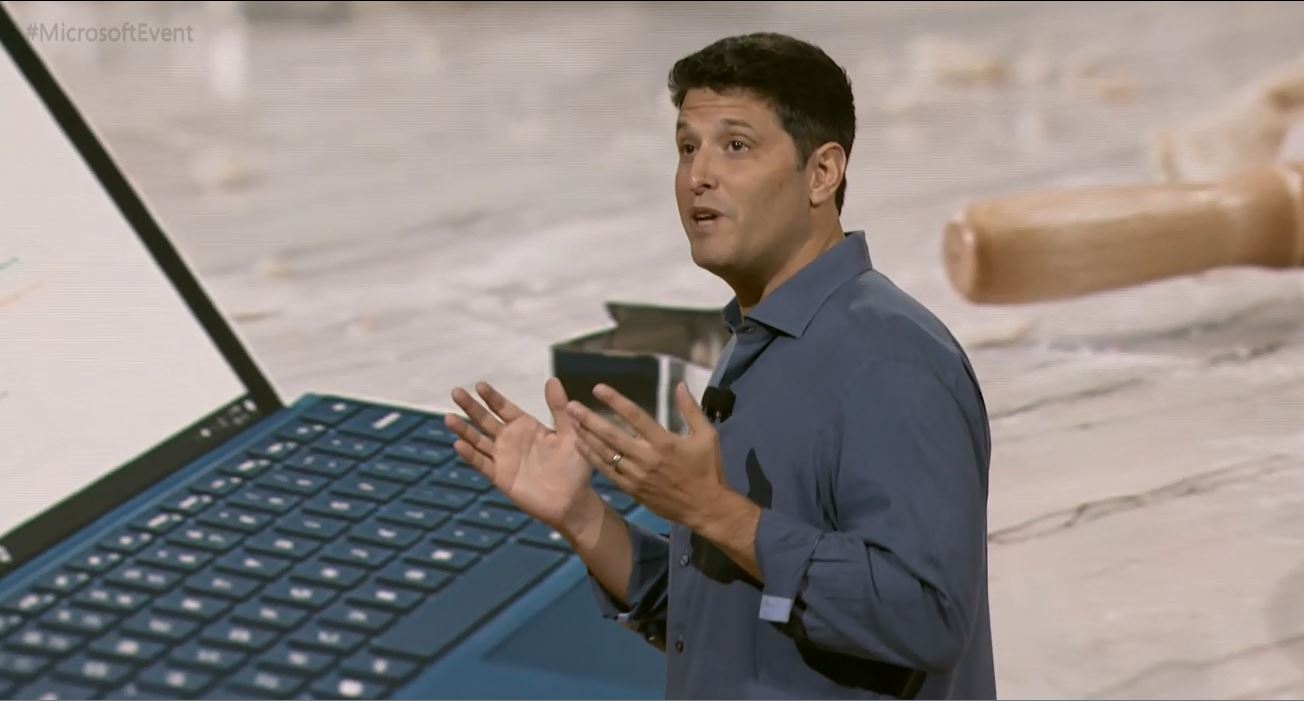
There it was, on the screen right behind Terry Myerson at yesterdays Microsoft Event, a giant reminder of how close Microsoft is to missing a major market shift, again.
The picture of the Microsoft Surface, sitting on a kitchen counter, in the middle of someone baking, shows both the potential, as well as the current failure, of Microsoft’s ability to capitalize on it’s technologies and reach a mass consumer market.
The kitchen is a key place Microsoft could grab a strong, early position in the smart personal assistant space, but as of yet, they’re squandering that opportunity.
They clearly get that millions of consumers use tablets and PCs to research recipes and guide their cooking, but they also miss just how badly the current combination of Surface and Cortana, Microsoft’s intelligent personal assistant, are at meeting the needs of those millions of consumers.
Like many things, they are so close, and they could have made some announcements today to address that huge opportunity, and get in the market against Amazon Echo and Google Home, who are already out of the blocks delivering smart digital assistants throughout peoples homes.
Let’s take a look:
Why is the Kitchen a key place for Microsoft?
Because:
A. It is an area where hundreds of millions of people use the web for what they are doing.
B. The current ways people use technology in the kitchen don’t really fit how they want to work, or the environment they’re working in.
C. It is one of the places that combines multiple of Microsoft’s key strengths:
- You need to use your voice while in the kitchen and Microsoft has two advantages here:
- Cortana: is a very good virtual assistant, she just needs a little more training to be better in the kitchen, (see below).
- Speech Recognition for Computer Control: As part of it’s “Ease of Access” Microsoft for years has pioneered voice control of Windows computers and tablets for navigating, clicking, dictating, etc.
- You need a screen: Recipes need to be seen, read, navigated. Family calendars need to be looked at to quickly see what’s going on this week, month, etc. While Amazon and Google are out of the blocks early with Echo and Google Home, these devices currently fall short in the kitchen.
- You need to access the apps/tools services where you store and manage your life and many people already have a lot of their stuff in Microsoft apps and services including Edge (Internet Explorer), OneNote, Outlook, etc.
And to win here, Microsoft needs to take a page out of other peoples playbooks: instead of providing broad capabilities that “kind of do many things adequately” they need to focus on doing “a few scenarios really, really well”.
Apple, during the Steve Jobs era, were masters at this. They didn’t try to be all things to all people, they focused on key scenarios, and key things within those scenarios, and did them really, really well, and made them really, really easy.
In short, Microsoft could gain a strong foothold by optimizing a kitchen experience, and by working with what consumers already use and own.
And this “already use and own” is key. If you’re proposition is “here, go buy this new $300/$500/$700 thing” you’ve missed the market. (more on this below)
What Do You Mean They’re Missing the Market, Aren’t They Showing a Surface in the Kitchen?
Yes, they are, and they do have many pieces of the solution already; a fairly competent assistant in Cortana, a nice slate/tablet form factor, but despite being close, they actually don’t have a solution that works.
Just look at the picture again, do you see what’s missing? Flour on the keyboard.
Yep, that’s right, there the Surface sits, on a counter amidst rolling pins, dough, cookie cutters, flour… and there’s no flour on the keyboard. It’s staged, it’s potential, but it’s not reality.
Sure, you could plop a Surface right there in the middle of the cooking, but nobody would. Or more precisely, people would probably try, get frustrated, and wish there was a better way, because Cortana (currently) is an ineffective assistant in the kitchen.
And trust me, I’ve tried. I do 90+% of my cooking from recipes I find on the web or store in OneNote, and most people I know use the web as a key resource for cooking.
Here are some of Cortana’s shortcomings in the kitchen:
- Can only set one timer at a time:
- Cortana today can’t do multiple timers, a must when you’re cooking. Note: Amazon’s Alexa is failry effective here where I can say “Set a timer for 10 minutes”, then say “Set a timer for 20 minutes” and when I ask how much time is left on the timer, Alexa will say “You have two timers, a 10 minute timer with xyz left and a 20 minute timer with abc left”. (Ideally, I should be able to name the timers like “Set a timer for the turkey for 2 hours” and “Set a timer for the carrots for 20 minutes”.)
- No ability to switch between recipes:
- It’s typical to have 2-3 recipes going for a given meal (entrée, 1-2 side dishes), and even if you have used the keyboard to navigate to three different recipes, one on each tab of your browser, you can’t say “Hey Cortana, switch tabs” or “Hey Cortana, go to tab 2” etc, etc.
- No ability to page up/down:
- You are frequently moving up and down within a recipe and “Hey Cortana, page down” today will give you the Wikipedia definition of the Page Up/Page Down keys.
- No ability to read specific sections of the recipe:
- To be truly effective in the kitchen, you should be able to say “Hey Cortana, read me the ingredients” or say “Hey Cotrana, how much sugar do I need?” or “Hey Cortana, what’s next”, all of which are way outside of Cortana’s current skills.
To be fair, Cortana isn’t unique here. I’ve tried using Siri who suffers as badly in the kitchen, and while Alexa is an amazing tool, she still falls short in the kitchen.
What could Microsoft Have Announced?
The Surface Studio that Microsoft announced is receiving broad recognition as an amazing device. As beautiful as it is, it is a high-end, large screen, premium all-in-one PC that will appeal to a relatively narrow segment of consumers, at a time that Amazon, Google, and Apple are targeting more broad consumer electronic experiences.
I hope, and trust, that Microsoft is working on targeting the home, and more specifically, the kitchen.
Here’s what I was hoping for:
- A Kitchen/Home Optimized Cortana:
Advances in Cortana to make her more conversational and contextual and integrates the ability to better control and navigate a computer/tablet, and solve the shortcomings I pointed out above.
2. A $125 – $150 “Cortana Show” Tablet: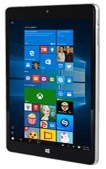
This would be a 7″-8″ tablet, with enhanced microphones for better listening, and a Windows 10 “skin” optimized for a kitchen and cooking experience.
I was recently at the Microsoft Store in Bellevue Square and they have an 8″ Windows 10 tablet from NuVision for $99. Granted, it is lower-end spec wise but it is beautiful, and plenty powerful enough for browsing the web and running OneNote or Evernote. Microsoft could beef up the microphones in a device like this, give it an optimized kitchen “mode” of Windows 10, and put a kickstand on the back for propping up on the counter.
3. A $50 “Cortana Talk” Device: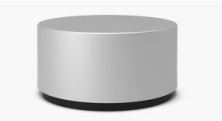
Similar to the Amazon Echo Dot, this would be a low-cost, network attached voice assistant that could act like an Amazon Echo or Google Home.
It could either work in a stand-alone, voice-only mode or with peoples existing iPads, Android tablets, or Windows tablets using “Cortana Connect”.
4. A free-$15 “Cortana Connect” 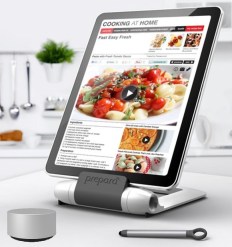
Remember the “use what people arlready own” above? This would be a wired or wireless connection between a Cortana Talk and an existing iPad, Kindle, Android tablet, Surface, Smartphone, etc (and/or Cortana apps running on these devices) that would turn any existing tablet or phone into display screens for the Cortana Talk.
Imagine a scenario where you have 2-3 people cooking, they each have their own tablet or phone (which they already own) and a single ~$50ish device that could use one or more tablets/phones in the kitchen to display and control.
“Cortana, display the carrot recipe on Bobs iPad” or “Cortana, display the turkey recipe on Sue’s phone”, then “Cortana, list the ingredients for the carrots” and “Cortana, set a 2 hour timer for the turkey”.
Or even a scenario where 1 person is cooking and they own an iPad. Cortana Connect could be the low cost, kitchen optimized, voice enabler for them.
But wait, won’t Apple add this stuff too? Yes, sure, maybe, but remember, Apple makes money when you buy new hardware. So while they might make this retro-active for devices 1 to 2 generations old, they’re certainly not going to enable older iPads to do this, plus you really do need more optimized microphones in a kitchen environment.
Will they do it?
As I noted above, I hope and trust Microsoft is working on this and will have something soon.
Despite it’s success in PC’s, Microsoft has not had much success in the consumer electronics market and smart, connected assistants, and the artificial intelligence that powers them, are the next big wave of computing.
Amazon and Google are already in the market, and I’m still wondering what Jony Ive and his A-team are doing over there at Apple (because clearly he had minimal involvement in the “meh” things Apple announced today).
Microsoft needs to move quickly, or I fear they will miss the market again.

 clarkb...