
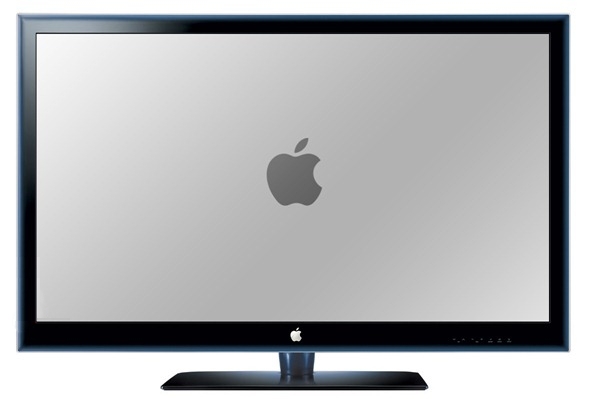
 Speculation continues to grow on Apple producing their own Television set and delivering integrated experiences across the TV, Tablet and Phone. While the TV Set industry is highly competitive there are some compelling reasons for Apple to enter the market and a very good chance they could achieve reasonable market share.
To be clear, it’s not likely Apple will garner the same market share they’ve achieved in phones or tablets, but it’s a big enough market to fuel renewed growth and momentum. As questions start to rise about Apple’s ability to innovate in the post-Jobs era, delivering on a truly great TV experience would help fuel both revenue expansion in a new vertical, as well as enhance the demand for iPhones and iPads.
Here’s why Apple will win (enough) in TV:
They will deliver a beautiful device:
- One of Apples many strengths is it’s industrial design and their ability to craft truly beautiful pieces of hardware. The race today is to make TV sets as thin as possible but they are all trending towards non-descript black panels. There’s good in this in that black tends to fade from view especially when the set is off making the device less obtrusive hanging on the wall, however Apple has demonstrated an ability to deliver beautiful hardware that’s nice to look at even when it’s off.
It will be priced competitively enough:
- Apple’s history is not to be the low-cost leader but rather deliver devices people lust after, charge a premium at introduction, then lower prices on previous generation devices when newer models are launched. Expect Apple television sets to be priced at the upper-end of the price range, but there will be enough demand and lust to drive strong initial demand. That, along with “managed” supply, will make Apple tv sets a hot product for premium buyers.
The experiences will be built into the set, not an additional box:
- One could argue that by building their own set, Apple is missing the opportunity to deliver a TV experiences across the existing installed base of tv sets, and therefore limiting their market potential. While it’s true they are passing up the current installed base, I expect that Apple’s TV sets will be so beautiful and the experiences like voice navigate, visual recognition, and phone/tablet control so well integrated, enough people will opt to replace their current TV set.
- Contrast that to the Microsoft approach of positioning the Xbox as the device for the living room that will provide the basis for integrated television experiences. While this has the potential to allow them to address the existing installed base, it still requires a non-trivial investment to purchase the box, and then you have 2-3 additional pieces of equipment (the Xbox itself, Kinect, and controllers) connected to your tv set. This isn’t to say Xbox will fail, it just means there is a significant % of consumers who will opt for an integrated Apple experience.
It will be a “TV First” experience:
- If we can learn anything by looking at Apple’s history it is that they are extremely good at identifying the most critical/important functions for a device and delivering highly polished implementations of those core scenarios. I call this “skimming the cream” and while it’s true they can be knocked for limitations the iPhone or iPad might have, they do such a beautiful job on the core functions that consumers love them.
- The Microsoft Xbox approach provides broader capabilities (tv, rich console gaming, etc) however the extra steps and extra ui that needs to be navigated to get to the core TV functions detracts from the core TV experience. And, at least for the current Xbox 360 implementation, the TV experience for most people remains the domain of yet a third device, the Cable Box, with different controllers, navigation and UI.
Apple will solve (for the most part) the age-old lament of “why do I need so many remotes” and will deliver a simple, but rich way to watch, explore and enjoy consuming and interacting with content on a large screen. And while they may not establish the same market share they enjoy today in phones and tablets, they will win enough of the market to help them continue to grow revenue, and continued dominance in where and how consumers spend their time.

 clarkb...